
Horse Farm and Pasture Clearing in Moore County, NC
Horse farm and pasture clearing around Southern Pines and the rest of Moore County, NC is mostly work at the edges: board fence lines swallowed by saplings and briars, a back paddock gone to pines, a riding lane through the woods, or old stumps in a field. Each job is smaller than clearing a whole tract but fussier, because fences, water lines, barns and animals are right there. This page covers how those jobs are planned, what to settle before a machine comes through the gate, and the rules that still apply on farmland.
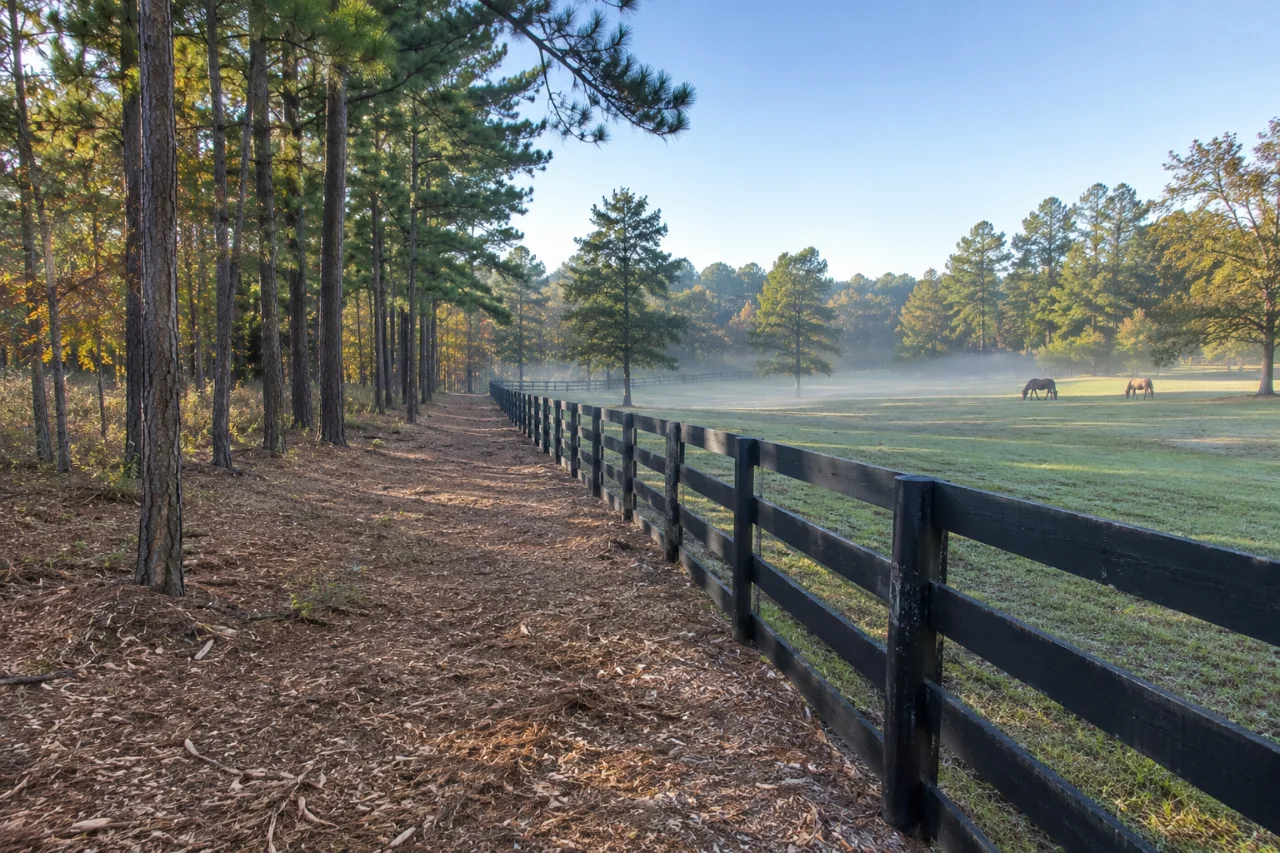
Clearing fence lines
A grown-in fence line is the most common small farm job. Saplings push boards off, vines pull wire down, and shade kills the grass along the edge. Before asking for prices, decide:
- How wide a strip. Measure it from the fence out into the woods, and say whether the inside edge of the pasture needs work too.
- Keep, repair or replace the fence. If the fence stays, the work right against it is usually done more carefully, sometimes by hand, so the boards and posts survive. If the fence is coming out anyway, the contractor can clear straight through and a new one goes up on clean ground.
- Where the line really is. An old fence isn't always on the boundary. Find the corners first, especially before clearing on the far side of a fence that borders a neighbor.
- Electric and buried wire. Turn off any electric fence, and point out old wire that may be grown into trees; it is hard on a mulching head and on a saw.
Reclaiming an overgrown pasture
Fields left alone fill in with pine seedlings, sweetgum, briars and broomsedge. Once the woody growth is mulched or cleared, the job turns into getting grass back. A few things decide how that goes:
- Chip depth. A thin layer of chips on a lightly grown field disappears into the sod; a heavy layer from a thicket may need raking or a second pass before it can be seeded.
- The sand. USDA describes the Lakeland soils as "excessively drained" and notes that "Many areas are cleared and used for peanuts, watermelons, peaches, corn, tobacco, and improved pasture" (Lakeland series). Deep sand drains quickly, which shapes what grows well and when to seed. A soil test before seeding takes the guesswork out of lime and fertilizer.
- Stumps. Where horses graze and mowers run, stumps should be ground below the surface and the holes filled, so nothing is left to trip over or catch a blade.
- Timing. Work in a season when the animals can be kept off the cleared ground until grass is up.
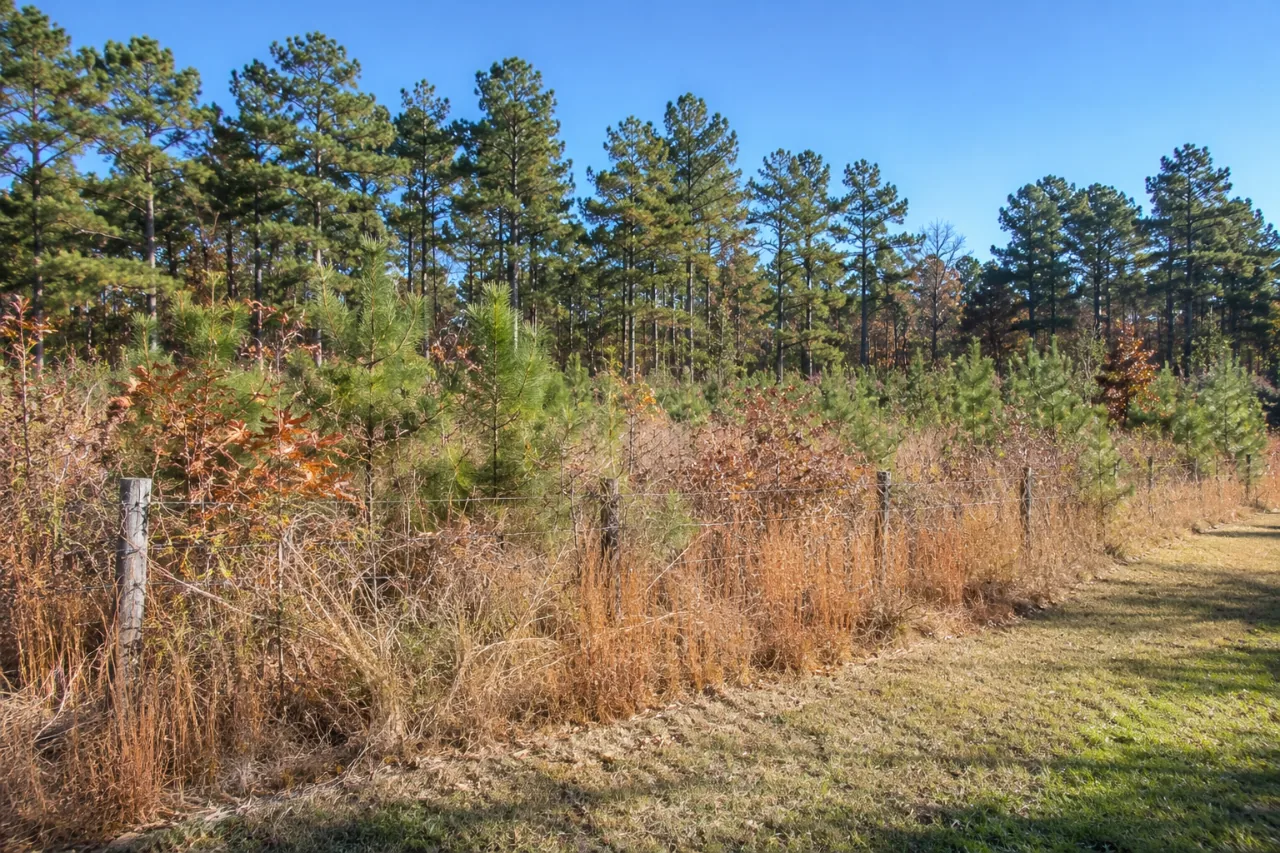
Riding lanes, trails and fire lines
Lanes through the woods are a good fit for a forestry mulcher, which can cut a path and leave a soft chip surface behind. Tell the contractor how wide and how high the lane needs to be for a horse and rider or for a truck and trailer, which trees along it must stay, and whether it should double as a fire line around woods you plan to burn. See forestry mulching for how the machines work.
Working around horses, barns and water
- Move the horses well away from the work. Mulching heads throw debris, and the noise alone upsets some animals.
- Mark private lines yourself: water to troughs, power to barns and run-in sheds, and any well lines. NC 811 marks "publicly managed underground lines," not private ones (NC 811 FAQ).
- Point out septic systems, manure storage, wet spots and any spring or pond.
- Check gate widths and whether a loaded trailer can turn around on the farm road.
- Agree on where trucks and machines will park and travel, so the pasture you're keeping doesn't get rutted.
What to do with the brush
On a farm the usual answer is to mulch it in place, or to grind it and use the chips on lanes. Burning can work on a big open tract, but the state air rule for land-clearing fires wants the fire at least 500 feet from any dwelling and from occupied commercial or institutional buildings not on the property, and the NC Forest Service requires a permit for most daytime burns near woods. See burning land-clearing debris.
Rules that still apply on farmland
- Streams and ponds. G.S. 113A-57 requires a buffer along lakes and natural watercourses during land-disturbing work, wide enough to keep visible silt in the 25 percent of the buffer closest to the work. Leave the banks alone unless you have checked.
- The one-acre line. Disturbing more than an acre generally needs a state erosion control plan filed 30 or more days ahead. Ask DEQ's Fayetteville Regional Office (910-433-3300) how that applies to clearing for pasture before a large job starts.
- Pines and woodpeckers. If the work will remove pines or come near a cavity tree, check the U.S. Fish and Wildlife Service's Moore County map first. See the woodpecker rules.
- Town limits. Some horse properties are inside Southern Pines' town limits or its extraterritorial area, where the town's own land disturbance and erosion rules apply. Southern Pines Planning: 910-692-4003. Outside the towns, Moore County Planning: 910-947-5010.
What farm clearing costs
National guides give a starting point. HomeAdvisor's 2025 land clearing guide puts lightly wooded land at $500 to $2,000 an acre (HomeAdvisor), and its forestry mulching guide puts mulching at $400 to $1,500 an acre for most jobs, or $125 to $400 an hour for small areas (HomeAdvisor, checked October 2026). Fence line work is often priced by the hour or the day rather than the acre, and care around a fence that stays adds time. Stump grinding is usually priced separately; see stump grinding. The contractor's written quote is what counts.
Pasture clearing questions
Will a mulcher damage a board fence?
It can if the operator works tight against it. Ask how the contractor handles the last few feet next to a fence that stays, and whether that part is done by hand.
Can grass grow back through the mulch?
Through a thin layer, usually yes. Thick chips need raking or time first. Ask the contractor what the ground will look like when they finish.
Should old pasture stumps be ground or pulled?
Ground below the surface is usually enough where you'll graze and mow. Pull them where a barn, arena or driveway will go, since buried roots rot and settle.
Is a permit needed to clear an overgrown pasture?
It depends on size, location and what is cut. Check the one-acre erosion rule with DEQ, the woodpecker map with the Fish and Wildlife Service, and town rules if the farm is inside Southern Pines. The permits guide lists each office.
How the referral works
Phone or use the short form to say where the property is, the rough size of the area and the work you have in mind. A single independent contractor who covers Moore County gets the request, visits to see the land in person, and puts a price in writing. Going ahead is up to you, and landowners pay nothing for the referral.
Want one local contractor to look at your land?
Phone or fill in a short form. The referral is free to landowners.