
Red-Cockaded Woodpecker Rules for Clearing in Moore County, NC
Before you clear pine woods in Moore County, NC, check where the land falls on the U.S. Fish and Wildlife Service's red-cockaded woodpecker map. The bird lives in groups around clusters of cavity trees in Sandhills pine woods and is protected under the federal Endangered Species Act. The Service sorts Moore County into a Red Zone and a Clear Zone, and which one your land is in decides what has to happen before pines come down. This page explains the zones, the letters, and Safe Harbor, from the Service's own documents. It is general information, not legal advice; the Service's Raleigh office has the final word.
Where the bird stands under federal law
The Service reclassified the red-cockaded woodpecker from endangered to threatened in a rule that took effect November 25, 2024 (Federal Register, October 25, 2024). Threatened does not mean unprotected. The Service's question-and-answer page says the accompanying 4(d) rule "adopts the same prohibitions that apply to an endangered species under section 9 of the ESA," and that those prohibitions apply "on both public and private lands" (USFWS reclassification Q&A). The Service describes the protected acts as take: harming, harassing, collecting or killing the birds.
The 4(d) rule carves out a few exceptions that matter to private landowners: take from prescribed burns and herbicide use on private land when landowners follow best management practices and minimize effects on known active clusters; take from installing and maintaining artificial cavities by trained people; and activities covered by permits, including conservation benefit agreements, the new name for Safe Harbor agreements. Clearing for a house, a pasture or a view is not among those exceptions.
Words the Service uses
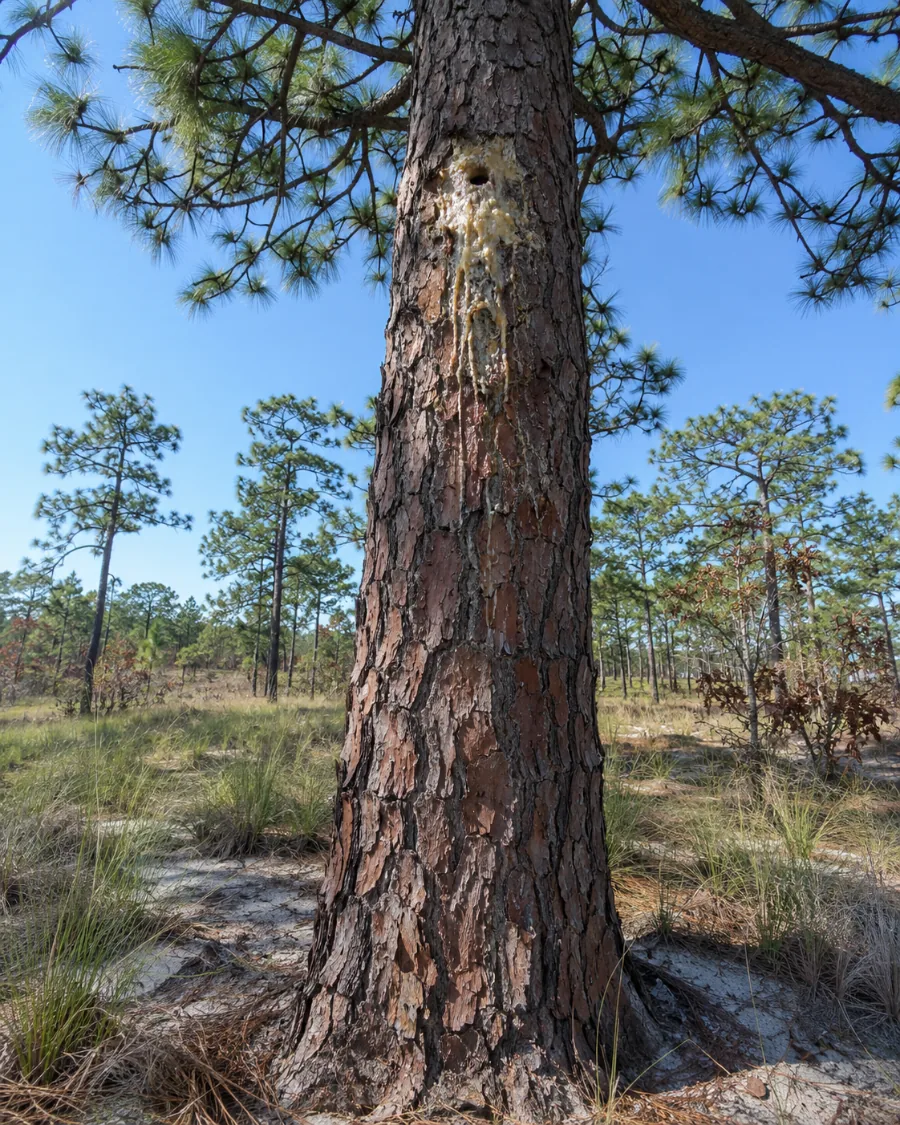
- Cavity tree
- A pine with a cavity the birds use.
- Cluster
- In the Service's words, "the aggregation of cavity trees used and defended by a group of red-cockaded woodpeckers."
- Foraging partition
- The pine stands next to a cluster and within a half-mile radius of its center, where the group feeds.
- DBH
- Diameter at breast height, the standard way a tree's trunk is measured.
- Red Zone / Clear Zone
- The two areas on the Service's Moore County map. The Clear Zone is "any area not marked as red on the map."
If your land is in the Clear Zone
The Service's Clear Zone self-certification letter is "only to be used in Moore County, NC" and only for projects outside the Red Zone. The person doing the project checks two boxes: that they have reviewed the most recent online map and the project is in a Clear Zone, and that they have read the letter and will follow its conservation measures "to the extent practicable." Those measures include:
- No work within 50 feet of a red-cockaded woodpecker cavity tree.
- If a new cavity tree appears during the letter's one-year life, no disturbance or removal within its drip line without further review.
- Avoid removing large pine trees, and keep turpentine trees and all old-growth longleaf pines.
- Protect longleaf trunks and roots, and trim large branches before a whole tree is taken down.
- Use native Sandhills landscaping no taller than seven feet.
The letter is good for one year and has to be reconsidered if the project design changes or new information turns up. Keep a signed copy with your clearing contract.
If your land is in the Red Zone
Red Zone projects go through review. The Service's Red Zone project review cover letter for Moore County lists what goes in the package:
- Optional, but it speeds the review: a box confirming a cavity tree survey done by "a qualified environmental consultant, following the USFWS' Survey Protocol."
- A site plan "showing locations of all pine trees to be removed or impacted, with their diameters correctly labeled."
- Whether trees 8 inches DBH or larger will be removed (another optional box).
- Any other information about the project.
The letter says the Service typically responds within 60 days and that work should not begin until consultation is complete. Build that time, and any consultant's fee, into the schedule and the budget. Questions go to the Service's Raleigh Ecological Services Field Office: raleigh@fws.gov or (919) 856-4520.
Safe Harbor in the Sandhills
The North Carolina Sandhills program was "the first Safe Harbor Agreement ever established!" according to the Service (USFWS Sandhills Safe Harbor). The Service runs it in the Sandhills; its map covers parts of Moore, Harnett, Cumberland, Hoke, Scotland and Richmond counties. The NC Wildlife Resources Commission runs the statewide program elsewhere (NCWRC Safe Harbor).
How it works, in the Service's terms:
- Baseline. The woodpecker groups and foraging habitat on the land when it enrolls. Landowners agree to keep that baseline. If a professional survey finds no birds using the property, there are no baseline duties, though the agreed management still applies.
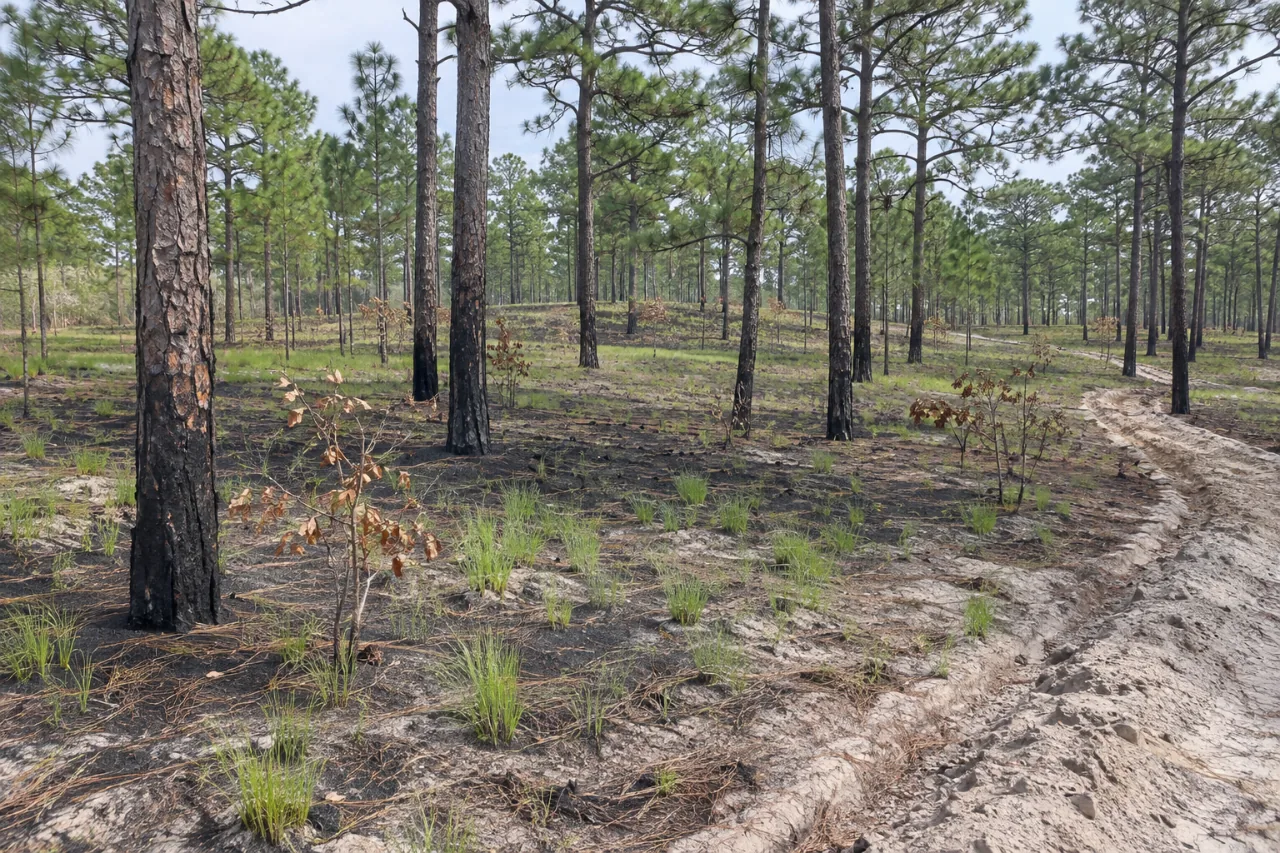
- Management. Agreements can include prescribed fire, planting longleaf, thinning dense stands, longer rotations, hardwood midstory control, cavity installation, and allowing monitoring. Landowners pay for this work themselves; the Service may help with advice.
- The assurance. Enrolled landowners "may make any lawful use of their property" as long as they meet baseline and do the agreed work, and no new restrictions are added if more birds move in because of their management.
The Wildlife Resources Commission adds that its agreements reduce "legal uncertainty" and can make a property eligible for longleaf cost-share. Across the bird's range, the Service says these agreements have enrolled 459 non-federal landowners covering about 2.5 million acres. To ask about the Sandhills program, call the Service's Raleigh office at (919) 856-4520.
What to do before clearing near pines
- Check the Service's most recent Moore County map to see whether the land is in the Red Zone or the Clear Zone.
- Note any pines you suspect are cavity trees and keep everyone well away from them until you know.
- Clear Zone: read and sign the self-certification letter, and give the contractor a copy of the measures.
- Red Zone: prepare the site plan of pines to be removed, consider a qualified consultant's cavity tree survey to speed the review, submit the package, and wait for the Service before starting.
- Write the measures into the clearing contract: the 50-foot limit, trees to keep, and how big trees are taken down.
- If you own a larger pine tract, ask about Safe Harbor before planning major work.
Woodpecker rule questions
Does the contractor handle the woodpecker paperwork?
The Service's letters are written for the person doing the project, usually the landowner or builder. A contractor or consultant may help, but confirm in writing who checks the map, who signs, and that it happens before work begins.
How can a landowner tell whether a pine is a cavity tree?
In the Red Zone, the Service's review letter has a box for a cavity tree survey by a qualified environmental consultant following its protocol, which speeds the review. If you are unsure about a tree anywhere else, ask the Raleigh office at (919) 856-4520 before anyone works near it.
What if a cavity tree appears after clearing is planned?
Under the Clear Zone letter, if a new cavity tree forms during the letter's one-year life, disturbance or removal within its drip line isn't allowed without further review.
Does mulching scrub oak need a woodpecker review?
The Clear Zone letter covers projects in general, so its 50-foot limit around cavity trees applies to mulching too. In the Red Zone, ask the Service how your project should be submitted.
How the referral works
Phone or use the short form to say where the property is, the rough size of the area and the work you have in mind. A single independent contractor who covers Moore County gets the request, visits to see the land in person, and puts a price in writing. Going ahead is up to you, and landowners pay nothing for the referral.
Want one local contractor to look at your land?
Phone or fill in a short form. The referral is free to landowners.