
Lot Clearing in Southern Pines, NC
Lot clearing in Southern Pines and the rest of Moore County, NC usually means opening a wooded parcel for a house, a driveway, a septic system and some yard, while keeping the longleaf pines worth keeping. The order matters more here than in many places. The septic evaluation, the town or county rules, and on many parcels a federal woodpecker check all come before a machine should start cutting. This guide walks through that order, what the work involves on sand and on clay, and how to get one local contractor to come and look.
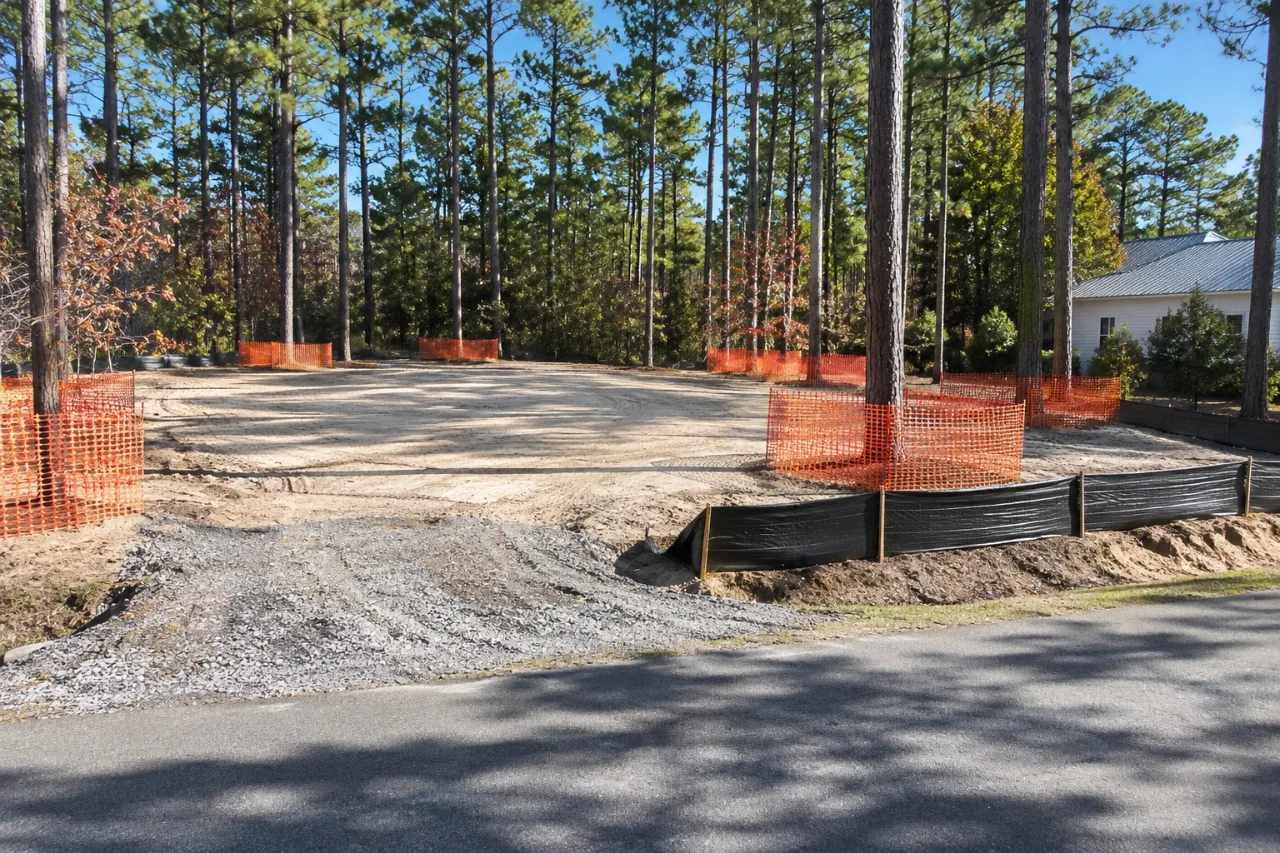
Step one: the boundary and the septic site
Know exactly where the lot lines run before any clearing is priced. Flag the corners and any line you are unsure of, and keep the survey handy for the contractor. In Pinehurst, the Village's planning page says new construction requires a survey prepared by a surveyor or engineer, so most house lots there will have one anyway (Village of Pinehurst Planning).
If the house will be on a septic system instead of town sewer, the septic site drives the rest of the layout. Moore County Environmental Health (910-947-6283, 1042 Carriage Oaks Drive, Carthage) handles septic approvals for the county, and Southern Pines' residential building permit packet lists "County Septic Tank Approval" among the papers needed before a building permit is issued. Ask Environmental Health what has to be opened up for the soil evaluation, and once the drainfield and its repair area are laid out, keep every machine off them, including the mulcher and the trucks.
Step two: the rules where the lot sits
Moore County has a town-by-town patchwork, so start by finding out whose rules apply. The short version, checked October 2026 (the permits guide has the full list):
- Southern Pines. The town's Unified Development Ordinance, in its subdivision section, says "No grading, clearing, and grubbing, shall occur prior to the issuance of Engineering Plan, Land Disturbance Permit or Building Permit approval." A single-family house on a lot of 30,000 square feet or less that isn't part of a larger common plan of development is excepted, but then needs an Erosion Compliance Permit. The town also requires erosion control approval before it issues a residential building permit. Call Southern Pines Planning at 910-692-4003.
- Pinehurst. The Village says that generally no permit is needed to take down a tree outside the Historic District, but "Land Disturbing Activities Including Grading and Clearing" are on its residential permit list, and its landscaping and buffer-yard rules apply when a vacant lot undergoes land-disturbing activity. Call Pinehurst Planning & Inspections at (910) 295-1900.
- Rural Moore County. Moore County Planning & Community Development (910-947-5010) handles zoning, and Central Permitting & Building Inspections (910-947-2221) issues building permits.
- More than an acre. Anywhere in the state, disturbing more than one acre requires an erosion and sedimentation control plan filed and approved 30 or more days before work begins.
Step three: check the woodpecker map before pines come down
The U.S. Fish and Wildlife Service keeps a Moore County map that splits land into a Red Zone and a Clear Zone for the red-cockaded woodpecker, a federally protected bird of Sandhills pine woods. In the Clear Zone, the Service lets a project self-certify with a letter, as long as nothing happens within 50 feet of a woodpecker cavity tree. In the Red Zone, the Service asks for a site plan of every pine to be removed, notes that a qualified consultant's cavity tree survey speeds its review, and says work should not begin until its review is complete, which typically takes up to 60 days. The woodpecker rules page explains both paths.
Step four: decide what stays
A Sandhills lot is often worth more with its big longleaf pines than without them, and the trees that stay need protecting before the first machine arrives. Walk the lot with the contractor and agree on:
- Which trees stay, marked with flagging or paint everyone can see from a cab.
- How far from each trunk machines, trucks and spoil piles must stay. Fencing at a wide radius is the clearest signal.
- How big trees near the keepers come down. The Service's Clear Zone letter, written for woodpecker habitat, recommends protecting longleaf trunks and roots and trimming large branches before a whole tree is felled; that is sensible practice next to any pine you want to keep.
- Where the driveway runs, so it skirts the best trees instead of going through them.
In Pinehurst, existing trees can count toward the buffer-yard planting the Village requires. Its 2021 FAQ says qualifying trees are those "8" in diameter and larger located in the associated perimeter buffer yard," and it gives extra credit for larger trees (Village of Pinehurst landscaping FAQ). Keeping them can save planting later.
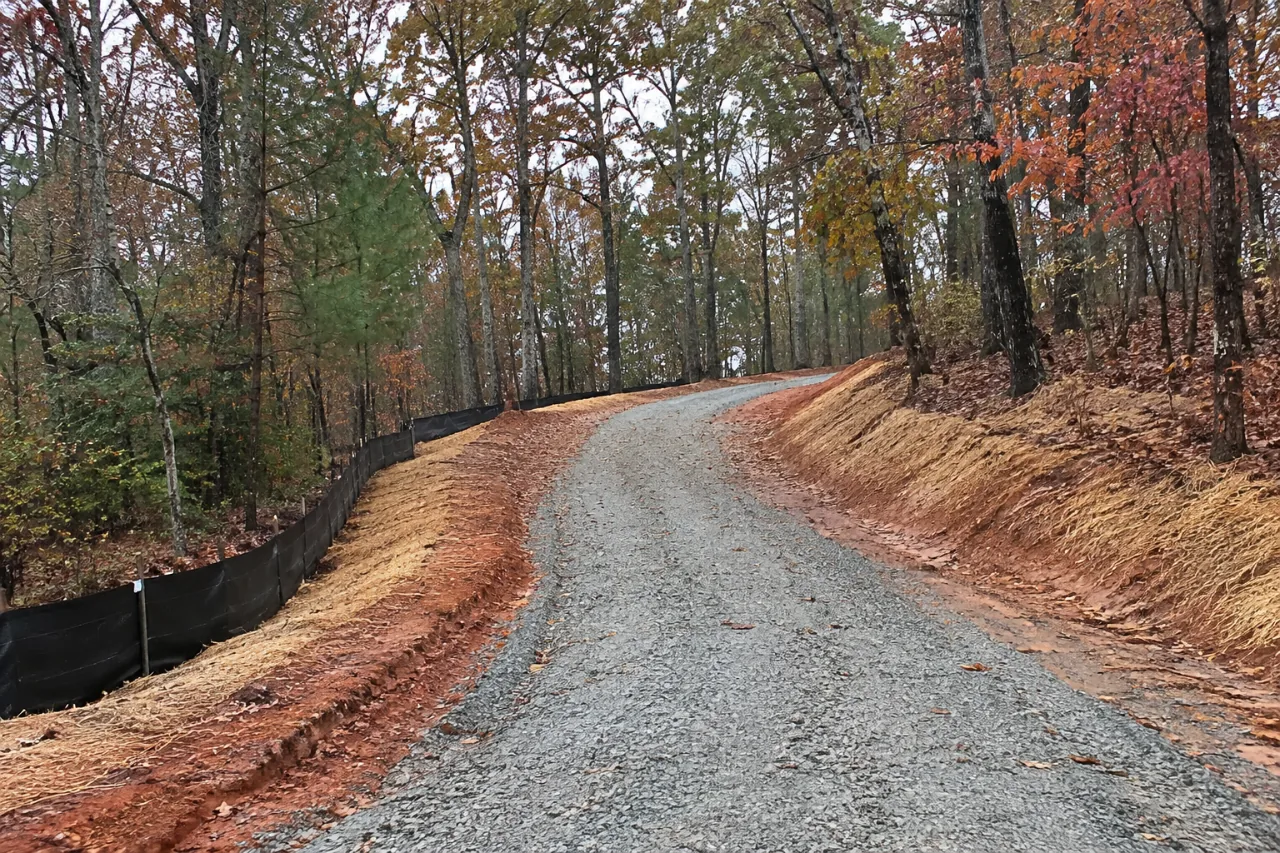
Clearing versus grubbing on a house site
Clearing takes the trees and brush off the ground. Grubbing pulls the stumps and roots out as well, so the soil can be graded and compacted. Under the house, the garage, the driveway and anything else that needs firm ground, the stumps have to come out. Elsewhere they usually don't. A common plan on a wooded lot is to mulch the yard and the edges, then grub only the footprint, the drive and the utility runs. Ask each contractor to mark the limits of grubbing on a sketch, because that line drives the price.
The ground makes a difference too. USDA's description of the Candor soils of the Sandhills calls them "very deep" and "somewhat excessively drained," with sand at the surface; the related Lakeland series is "excessively drained" (Candor, Lakeland). Water soaks in fast on that kind of ground, but bare sand on a slope still washes. Not every Moore County lot is sand, though. Some sit on clay close to the surface, which holds water and behaves very differently after a rain, so ask the contractor how they plan around wet weather on your particular soil.
Erosion control
North Carolina's Sedimentation Pollution Control Act (G.S. 113A-57) says no one may start a land-disturbing activity "that will disturb more than one acre on a tract" unless an erosion and sedimentation control plan is filed and approved 30 or more days ahead. The same section requires a buffer along any lake or natural watercourse wide enough to keep visible silt in the 25 percent of the buffer nearest the work. Below an acre, no state plan is needed, but sand moving into a ditch, street or neighbor's yard is still a problem, which is why silt fence goes in on the low side before clearing starts.
Inside Southern Pines and its extraterritorial area, the town runs its own erosion control program, according to DEQ's list of local programs. Whispering Pines runs its own program too. Elsewhere in the county, ask DEQ's Fayetteville Regional Office (910-433-3300) about a plan.
Where the debris goes
A house lot produces logs, tops, brush and stumps. The usual choices are to mulch it in place, grind it and haul the chips, haul everything off, or burn it under state rules. Burning on a lot with neighbors is often off the table: the state air rule for land-clearing fires wants the fire at least 500 feet from any dwelling unless the neighbors sign waivers. See burning land-clearing debris. Whatever the plan, put it in the written quote.
Before anyone digs
Grubbing and grading are digging. NC 811 asks you to "Contact 811 or 1-800-632-4949 three working days before you plan on digging." The marking is free, but it covers "publicly managed underground lines." A private well line, an old septic line, or power run to a shed is yours to find. Settle in writing whether you or the contractor places the 811 request.
Lot clearing questions
How much of a lot gets cleared for a house?
Only what the house, driveway, septic system, utilities and yard need, plus working room. Ask the builder for a plot plan and have the contractor stake the clearing limits from it. In Pinehurst, buffer-yard rules may also decide how much has to stay wooded.
Will a contractor clear just the pad and the driveway?
That is a common way to scope a wooded lot. Get the limits drawn on a sketch and written into the quote, along with what happens to the stumps and debris on each part.
Should a lot be cleared before the septic evaluation?
Not fully. Ask Moore County Environmental Health (910-947-6283) what access the evaluation needs. Clearing too much too early can mean driving machines over the very ground that would have made the best drainfield.
Does a half-acre lot in Southern Pines need a land disturbance permit?
The town's ordinance excepts a single-family house on a lot of 30,000 square feet or less, if the lot isn't part of a larger common plan of development, from the rule against clearing before a land disturbance permit, but it then requires an Erosion Compliance Permit. A half acre is about 21,780 square feet. Confirm with Southern Pines Planning (910-692-4003) before work starts, because erosion control approval is also needed for the building permit.
How the referral works
Phone or use the short form to say where the property is, the rough size of the area and the work you have in mind. A single independent contractor who covers Moore County gets the request, visits to see the land in person, and puts a price in writing. Going ahead is up to you, and landowners pay nothing for the referral.
Want one local contractor to look at your land?
Phone or fill in a short form. The referral is free to landowners.