
Scrub Oak and Understory Clearing in Southern Pines, NC
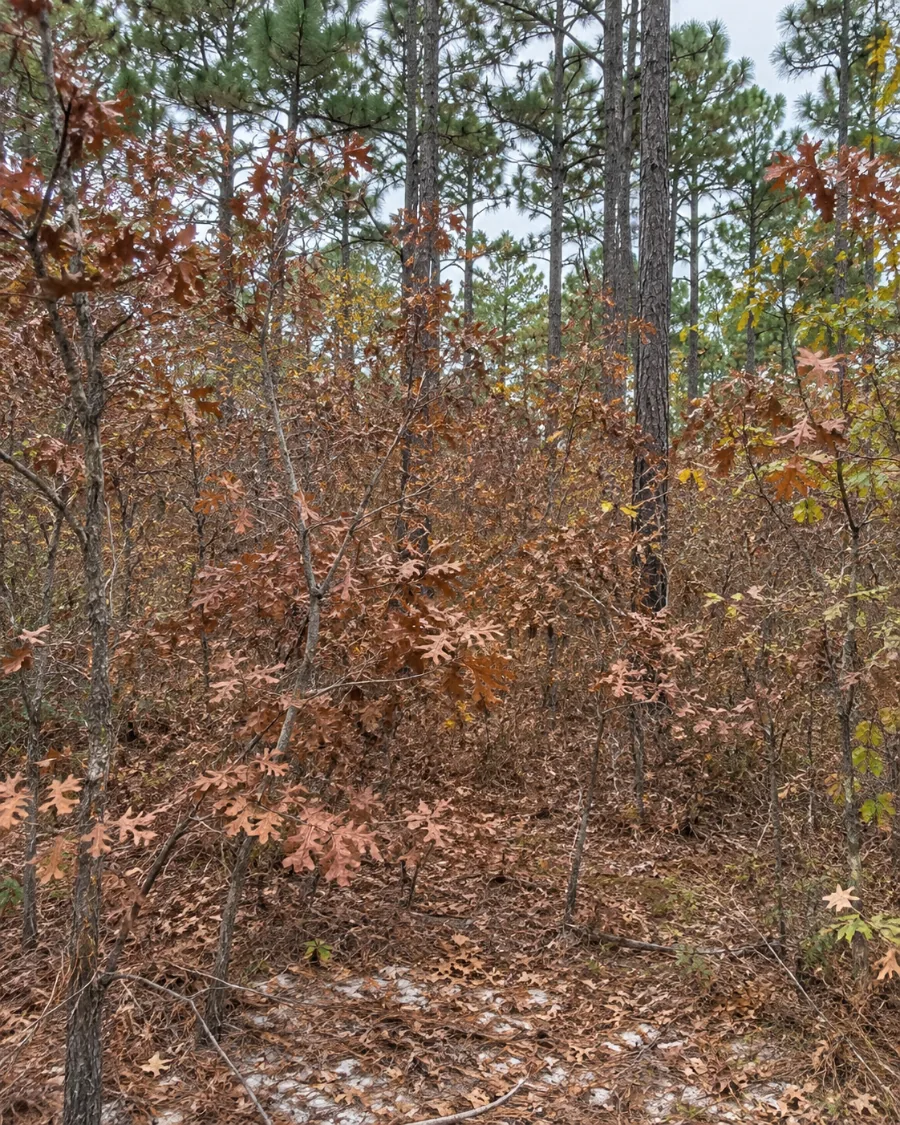
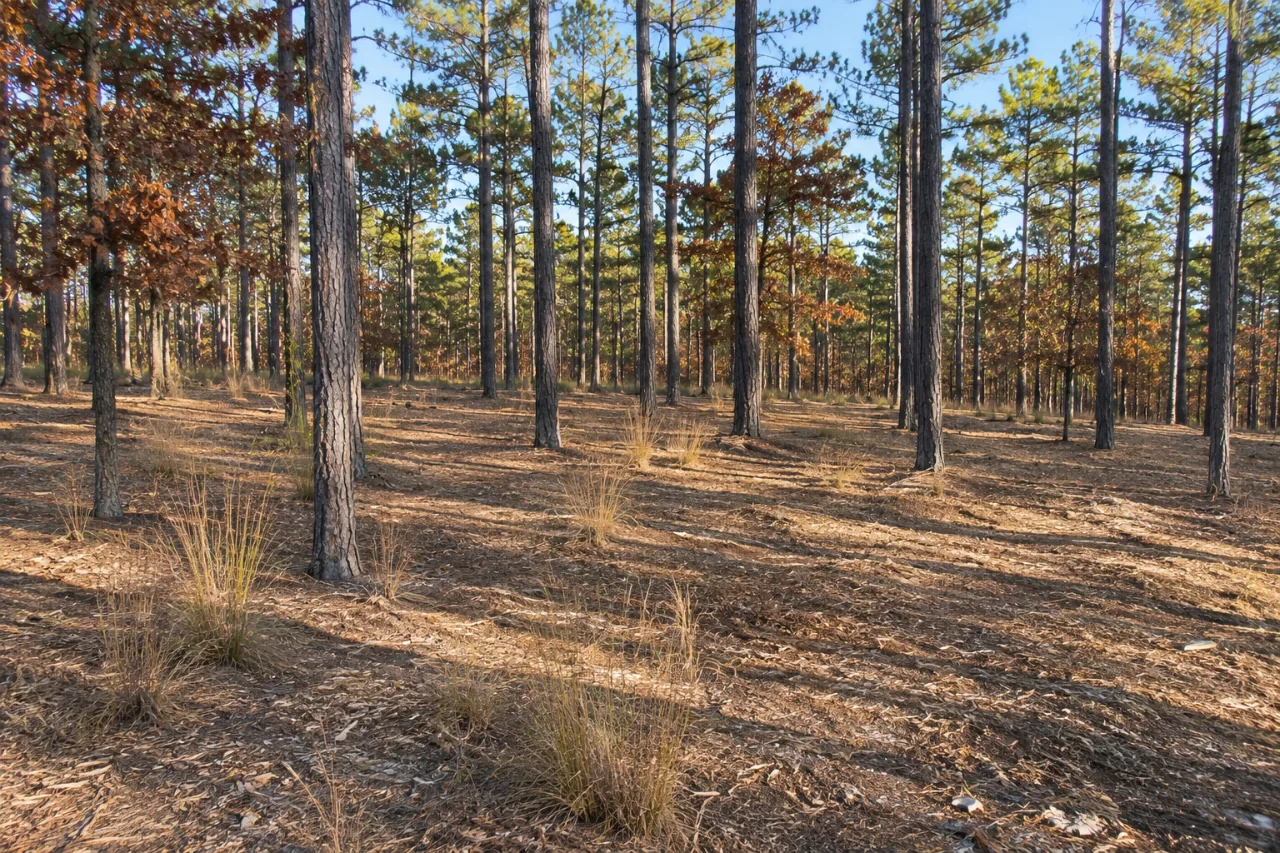
A lot of wooded land around Southern Pines grows in two layers: tall longleaf pines overhead and, under them, a thicket of turkey oak, blackjack oak and other scrub. Scrub oak and understory clearing takes out that middle layer, all of it or just part, and leaves the pines. This page covers why Moore County, NC landowners do it, the ways it gets done, which trees to keep, what grows back, cost-share programs for larger tracts, and the woodpecker rules that come with pine woods.
What grows under Sandhills pines
USDA's soil descriptions are a good field guide to the deep sands. On the Candor series, "Where wooded--blackjack oak, turkey oak, bluejack oak, post oak, longleaf pine, and occasional hickory or dogwood." On the Lakeland series, the natural vegetation is "blackjack oak, turkey oak, post oak; scattered long leaf pine" (Candor, Lakeland). On a neglected tract, those oaks, along with whatever else seeds in, such as sweetgum, young pines and briars, can grow into a layer you can barely walk through.
Why landowners clear it
- To see and walk their own land, and to find the lines and corners.
- To open a view from the house, or to see how a lot lays before building.
- To make room under the pines for pine straw raking, which USDA notes is common on these soils.
- To get woods ready for prescribed burning, if that is part of the long-term plan.
- To improve habitat. The U.S. Fish and Wildlife Service lists "hardwood midstory control" among the management work landowners in its Sandhills Safe Harbor program agree to do for the red-cockaded woodpecker.
- To make a property easier to show and sell.
How it gets done
- Forestry mulching. A tracked machine grinds the scrub in place and leaves the pines. It is the most direct way to open up a few acres. See forestry mulching.
- Hand cutting. A saw crew cuts selected stems and either chips them or piles them. It is slower but gentler next to houses, septic fields, steep spots or trees you are nervous about.
- Prescribed fire. Burning is a forest management tool rather than a clearing job, and whether it suits a thickly grown tract is a question for a forester. Any open burn in or near woods needs an NC Forest Service permit during set hours. See the burn rules.
- Herbicide. Used on cut stumps or resprouts, usually as a follow-up. The federal 4(d) rule for the woodpecker excepts take caused by herbicide use and prescribed burns on private land when landowners follow best management practices.
On most properties the answer is a combination: mulch first, then deal with regrowth by fire, mowing or treatment.
Deciding what to keep
Clearing every hardwood is rarely the goal. Before work starts, walk the tract and flag:
- Every longleaf pine you want kept, and any young longleaf coming up in openings.
- The largest oaks, hickories and dogwoods, if you want some hardwood shade or color.
- Edges along property lines, roads and neighbors where a screen of scrub is worth keeping.
- Wet spots, ditches and stream edges, where machines should stay out or keep a buffer.
If the property is in the Service's Red Zone for the woodpecker or has a known cavity tree, settle that before flagging anything. The Clear Zone letter bars work within 50 feet of a cavity tree, recommends keeping turpentine trees and all old-growth longleaf, and calls for landscaping with native Sandhills plants no taller than seven feet in its measures. The woodpecker page has the details.
What grows back
Cutting scrub oak doesn't remove its roots. Ask the contractor what to expect on your ground in the first year or two and what they recommend for follow-up. Plan the budget with a second step in mind, whether that is a later mulching pass, mowing on open ground, herbicide on stumps, or bringing fire back to the woods.
Cost-share for larger tracts
If the goal is healthier pine woods rather than a cleared lot, public programs can help pay for the work:
- NC Forest Service Forest Development Program. The FDP partially reimburses landowners for site preparation, seedlings, planting and "release of desirable seedlings from competing vegetation," and says additional practices that improve existing forests "may also be cost-shared." A forest management plan approved by the NCFS is required, and private landowners can receive cost share on up to 100 acres a year. Rates are set by district. NC State Extension notes the FDP rate rises to 60 percent for planting longleaf pine (Financial Incentives for Forest Management, reviewed November 2025).
- NRCS EQIP. The same Extension publication says EQIP practices for forest landowners include "prescribed burning, restoration and management of declining forest habitats, and tree establishment."
- Safe Harbor. The NC Wildlife Resources Commission lists eligibility for longleaf cost-share among the benefits of a woodpecker Safe Harbor agreement.
Start with the NC Forest Service Moore County office at 1358 NC Hwy 73, West End (910-235-0216), which can explain management plans and current funding. Cost-share programs generally have their own approval steps, so ask before the work is done, not after.
What understory clearing costs
National figures: HomeAdvisor puts forestry mulching "between $400 and $1,500 per acre" for most homeowners (HomeAdvisor, checked October 2026). HomeAdvisor's 2025 land clearing guide puts lightly wooded land at $500 to $2,000 an acre (HomeAdvisor). Scrub density, stem size, the number of keepers to work around, and slopes drive the price here. Only a written quote from someone who has walked the tract counts. See the cost guide.
Scrub oak clearing questions
Should every scrub oak come out?
Not necessarily. Many owners keep the biggest oaks and a screen along the road or a neighbor. Decide before work starts and flag what stays, because a mulcher can't put anything back.
Is a burn permit needed for a prescribed burn?
The NC Forest Service requires a permit between midnight and 4 p.m. for an open burn in or within 500 feet of woodland that is more than 100 feet from an occupied dwelling. Permits are free. Call the Moore County office at 910-235-0216 for help planning a burn.
Will a contractor work around young longleaf?
Ask. Small longleaf can be hard to see in a thicket, so flagging them is the surest way to keep them.
Does clearing scrub oak need a permit in Southern Pines?
It can. The town's ordinance restricts clearing before a land disturbance permit in some cases, and the town has been working on new tree protections for rural land. Ask Southern Pines Planning at 910-692-4003 first.
How the referral works
Phone or use the short form to say where the property is, the rough size of the area and the work you have in mind. A single independent contractor who covers Moore County gets the request, visits to see the land in person, and puts a price in writing. Going ahead is up to you, and landowners pay nothing for the referral.
Want one local contractor to look at your land?
Phone or fill in a short form. The referral is free to landowners.