
Who Clears Land in Moore County, NC?
Who clears land in Southern Pines and the rest of Moore County, NC? Depending on the job, it might be a forestry mulching operator, a grading or site-work contractor, a tree crew, a stump grinder, or a logger buying timber. This guide explains who usually does what, North Carolina's $40,000 general contractor license line, how to look up a license, what to ask about insurance, and what a written clearing contract should spell out. Contractors are responsible for their own licensing, insurance, permits, pricing and warranties.
Who does what
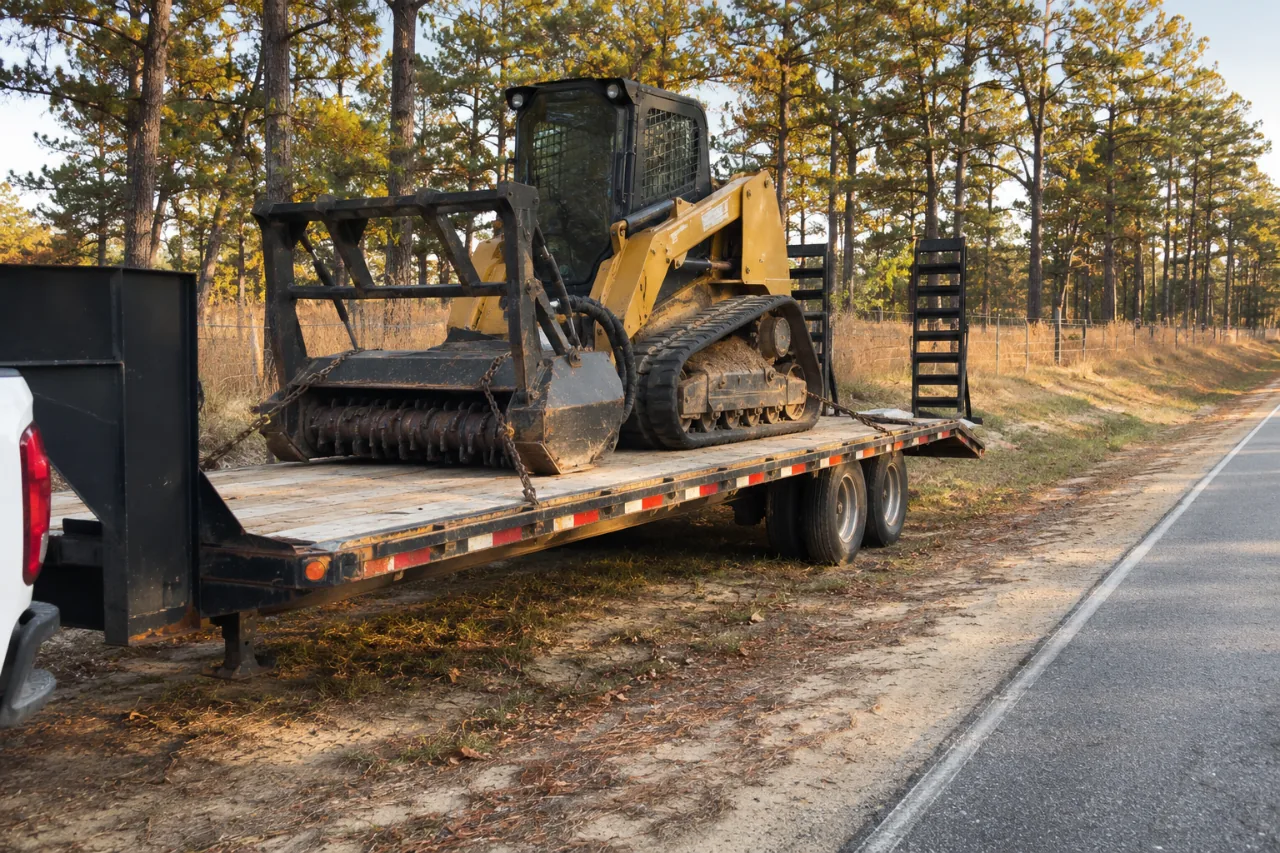
- Forestry mulching operators run a tracked machine with a mulching head. They suit understory, fence lines, trails and opening lots. See forestry mulching.
- Grading and site-work contractors bring excavators and dozers to cut trees, pull stumps, grade house pads and build driveways. See lot clearing.
- Tree crews take down and trim individual trees with climbers, bucket trucks or cranes, which matters near houses, power lines and the trees you are keeping.
- Stump grinding outfits handle stumps left behind. See stump grinding.
- Loggers and timber buyers harvest merchantable pine. On a larger tract, a consulting forester can help you sell timber and plan what comes after; the NC Forest Service notes that a private consulting forester is one of the people who can write the management plan its cost-share program requires.
- Environmental consultants do the red-cockaded woodpecker cavity tree surveys that speed the Fish and Wildlife Service's review in the Red Zone. See the woodpecker rules.
Many jobs involve more than one of these. A lot might be logged, then mulched, then grubbed only where the house goes.
North Carolina's license line
Under G.S. 87-1, a general contractor is anyone who, for a price or fee, undertakes to build or manage the construction of "any building, highway, public utilities, grading or any improvement or structure where the cost of the undertaking is forty thousand dollars ($40,000) or more." Grading is named. So a clearing and grading job of $40,000 or more calls for a contractor with a general contractor license from the state board, while a smaller mulching or stump job does not fall under that statute.
To check a license, search the NC Licensing Board for General Contractors by name or license number. Check that the license is active and that the name on it matches the company on your contract.
Insurance
Clearing puts heavy machines and falling trees near houses, fences, wells and power lines. Ask for a certificate of insurance sent to you directly by the contractor's insurance agent, with you named as the certificate holder. It should show general liability coverage, with workers' compensation if the contractor has employees on the job. Check the dates and call the agent if anything looks off. Contractors are responsible for carrying their own coverage.
Questions to ask before you sign
- Which parts will be mulched, which grubbed, and which left alone, and is that marked on a sketch?
- What is the largest tree your machine handles, and how will bigger ones come down?
- How will the trees I'm keeping be protected, and how close will machines get to them?
- Who checks the Fish and Wildlife Service's Moore County map, and who signs the Clear Zone letter or prepares the Red Zone package?
- If more than an acre will be disturbed, who prepares and files the erosion control plan?
- Who places the NC 811 request, and how will private lines be found?
- What happens to the debris? If it's hauled, where does it go? If it's burned, who gets the permit?
- What does the price include: cleanup, raking, grading, seeding, silt fence?
- How does rain change the schedule, and is there a charge for weather days?
- What is the payment schedule, and what does the warranty, if any, cover?
What the contract should say
- The parcel, and the clearing limits on a sketch or by flags.
- The method for each area, and the stump and debris plan.
- Trees and features to protect, with any woodpecker measures written in.
- Erosion control, and who obtains which permits.
- The price, what it includes, and how changes are priced.
- Start and finish dates, the payment schedule, and cleanup at the end.
Warning signs
- A large cash payment up front before any work.
- No written quote, or a quote with no clearing limits.
- "No permits needed" without any check of the town, the acreage or the woodpecker map.
- Pressure to decide on the spot.
- A company name on the truck that doesn't match the one on the paperwork.
Hiring questions
Does a mulching job need a contractor with a state license?
G.S. 87-1 applies to undertakings of $40,000 or more that include grading or other construction. Most small mulching jobs cost less than that. Larger clearing and grading projects can cross the line.
How many quotes should a landowner get?
Enough to compare the same scope. Price differences often come from different assumptions about stumps, debris and what stays, so make sure each quote describes the same work.
Is the contractor responsible for permits?
Only if the contract says so. Decide who handles each permit and the woodpecker letter, and write it down.
What is the difference between clearing and logging?
Logging removes merchantable timber, usually by someone buying it. Clearing deals with everything else, from brush to stumps. On a larger tract, logging first can leave less to clear.
How the referral works
Phone or use the short form to say where the property is, the rough size of the area and the work you have in mind. A single independent contractor who covers Moore County gets the request, visits to see the land in person, and puts a price in writing. Going ahead is up to you, and landowners pay nothing for the referral.
Want one local contractor to look at your land?
Phone or fill in a short form. The referral is free to landowners.